Seger Research

DTULogo
I am currently a full professor in the Surface Science and Catalysis section at the Physics Department at the Technical University of Denmark (DTU). Our research focuses on using the power derived from sustainable energy sources (i.e. wind and solar) and using this to electrochemically drive reactions to high value chemicals and fuels.  I am involved in the Pioneer Center for Accelerating P2X Materials Discovery (CAPeX) , thus some of my research is tied in to the focus of this center as well.  To contact me my email is brse@dtu.dk.

My research is focused on accelerating the transition from a fossil fuel and chemical based society to one that is based on sustainable energy and chemicals.  To understand where we are now, and where we need to be, see my powerpoint I use for the introductory lecture to my Physics of Sustainable energy course here. Into the details, my research relates to various electrocatalytic reactions primarily related to CO2 electrolysis to various organic chemicals, but also including water electrolysis and partial oxidation reactions.  (See here for why CO2 electrolysis.)
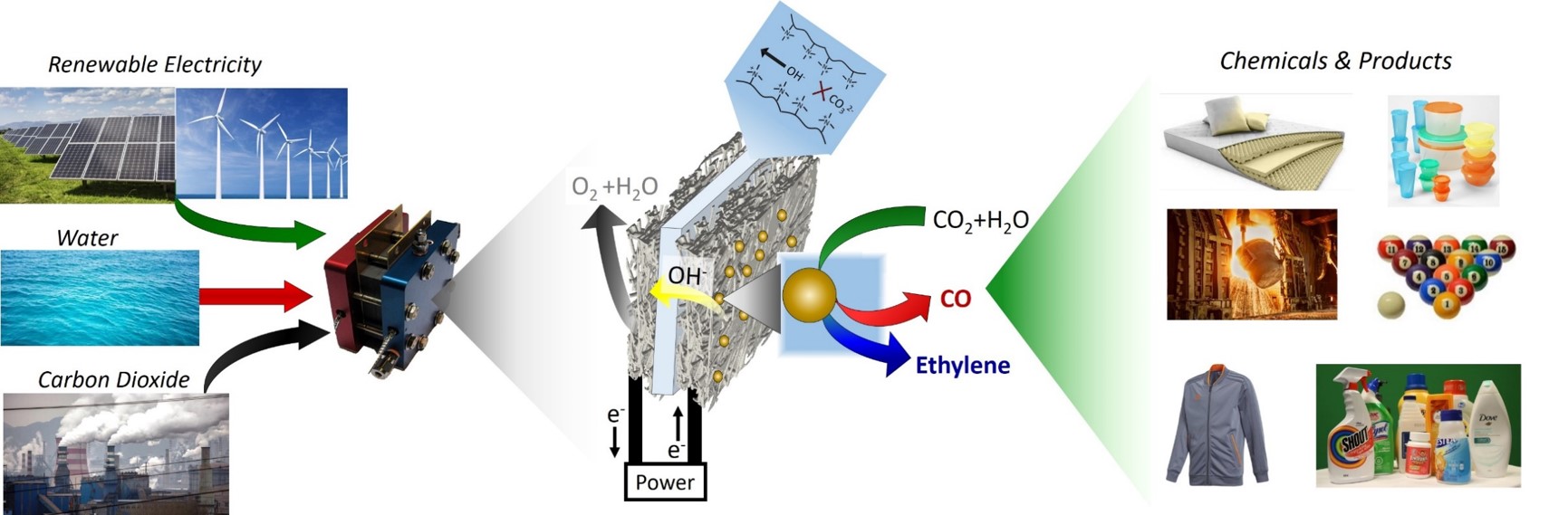
CO2 Electrolysis


My research can be broken down into various forms of electrocatalysis both in terms of reductive reacitons, oxidative reactions, and electrochemical device analysis.   Click on one of the links below to learn more about one these focuses.
Synchrotron Based Analysis Reaction Environment in Scalable Devices
New Electrosynthesis Reactions
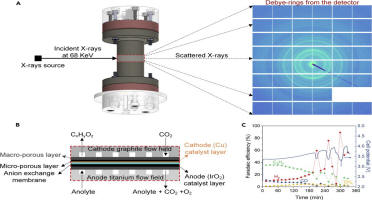
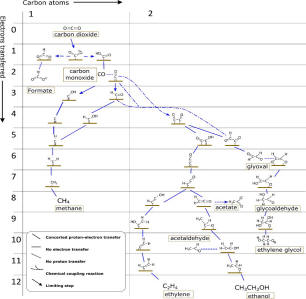
Organic electrolysis produces a wide variety of products with highly sensitive selectivity.  Actually seeing what is going on in commercial devices is challenging.  By using high powered x-ray from synchrotron facilities we can use a multitude of analysis techniques to allow us to 'see' in the reactor while it is operating.  This allows us to first establish the science, and based on this, vary parameters to optimize performance. The catalytic environment in commercially relevant devices is not always the same as with fundamental studies. The reaction environment in scalable devices can be quite different, meaning we both need to discover the science of what is actually happening, and then use fundamental knowledge to help optimize perfromance within the engineering constraints. Over the last decade CO2 electrolysis researchers have now mostly understood the reaction mechanism to all 14 products. This knowledge of how carbon reacts with an electrocatalysts now gives us the oppurtuntity to develop new electrocatalytic organic synthesis reactions. I am focusing on electro-coupling butadiene with CO2 and amines reacting with CO2 electrolysis intermediates.
watersplitting device Reactor pic CO2 reduction mechanism
Xu et al, Nature Nanotechnology, 2025 Xu et al. Ange. Chem. Int., 2025 Seger et al. ACS Energy Letters, 2025
This website is normally updated yearly. It was last updated 09-11-2025